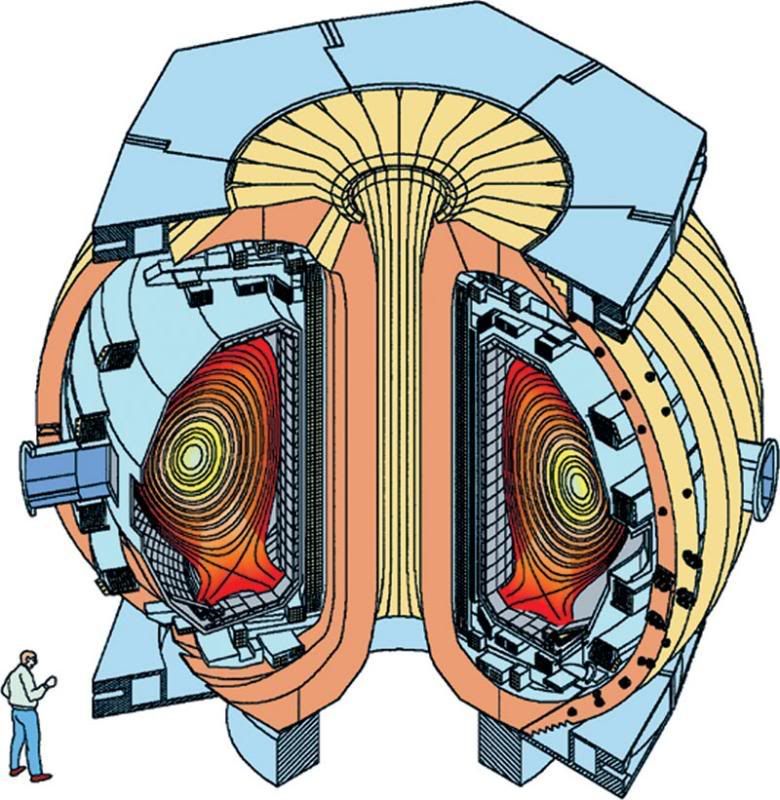
My diagram, which pictures a volcano in full blast, is probably viewed as a more elementary example in the world of diagrams. As I was searching for a diagram that interested me the most, I realized that many diagrams now-a-days aren’t very visual at all. Now, maybe I’m wrong here, but I thought that one reason for even creating a diagram was so that a person could put their information in a more visual set-up. But, when I looked at all the examples, they were all pretty much just a bunch of words in a bubble. To me, that’s not visual at all. Now, I may sound somewhat perturbed here, but that’s only because I am such a visual learner. Diagrams were how I survived many or any science class. So when I see people just putting the same boring notes into little bubbles or squares and calling them diagrams, I have to disagree.
So today, we are going to learn about volcanos! This wonderful diagram, which I have so gratefully taken from the Education World Website (http://www.education-world.com/a_tech/techlp/techlp039.shtml), shows a volcano at full eruption. We also learn each of the different parts that work together to create a volcano. We can see the craters, the vents, and even learn where the sill is located. To me, this is very informational. I think that the labeling on this diagram is very basic, but it also needs to be because the whole diagram itself is basic. I also like the fact that the diagram has a cartoon look to it, almost as if someone had doodled it on the paint application. I believe that this factor is important to the diagram as a whole because it helps the diagram connect to its audience who is obviously fairly young. I’d say early to middle grade school to be exact. One of the biggest differences that this diagram has had to suffer now that it is on the world wide web instead of in a fourth grade classroom is that it is very limited. It can always only be a drawn diagram. Maybe, if the designer gets creative, they can add some animation to it and make the volcano actually explode over and over again, but it will never be the same as some 3-D model that a little kid stays up all night working on. We will never be able to see the combination of baking soda and other ingredients that make a chemical reaction that spills over the edge of the volcano and makes an exciting mess all over the classroom table. We lose all of that, but I think we are starting to get used to missing all of these things with the internet. We are starting to become too digital and wrapped up in technology that we forget to get our hands dirty with the real diagrams. I know that this isn’t very close to the idea of what you wanted for the blogs but still…it needed to be said.
So today, we are going to learn about volcanos! This wonderful diagram, which I have so gratefully taken from the Education World Website (http://www.education-world.com/a_tech/techlp/techlp039.shtml), shows a volcano at full eruption. We also learn each of the different parts that work together to create a volcano. We can see the craters, the vents, and even learn where the sill is located. To me, this is very informational. I think that the labeling on this diagram is very basic, but it also needs to be because the whole diagram itself is basic. I also like the fact that the diagram has a cartoon look to it, almost as if someone had doodled it on the paint application. I believe that this factor is important to the diagram as a whole because it helps the diagram connect to its audience who is obviously fairly young. I’d say early to middle grade school to be exact. One of the biggest differences that this diagram has had to suffer now that it is on the world wide web instead of in a fourth grade classroom is that it is very limited. It can always only be a drawn diagram. Maybe, if the designer gets creative, they can add some animation to it and make the volcano actually explode over and over again, but it will never be the same as some 3-D model that a little kid stays up all night working on. We will never be able to see the combination of baking soda and other ingredients that make a chemical reaction that spills over the edge of the volcano and makes an exciting mess all over the classroom table. We lose all of that, but I think we are starting to get used to missing all of these things with the internet. We are starting to become too digital and wrapped up in technology that we forget to get our hands dirty with the real diagrams. I know that this isn’t very close to the idea of what you wanted for the blogs but still…it needed to be said.

 "I want to see a piece of the essayist. I want to see a mind at work, imagining, spinning, struggling to understand. If the essayist has all the answers, he isn't struggling to grasp, and I won't either. When you care about something, you continually grapple with it, because it is alive in you. It thrashes and moves, like all living things." (Atwan 22)